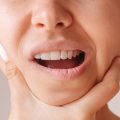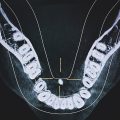

A blocked salivary gland occurs when saliva cannot drain freely through one of the salivary ducts, usually because of a stone, a narrowing, scar tissue or unusually thick saliva. Blocked salivary gland symptoms commonly include swelling under the jaw or in the cheek, pain that worsens around meals, tenderness over one gland, and a dry mouth or an unpleasant taste. Symptoms often flare while eating and settle afterwards, which is why they are so easy to dismiss. This guide sets out the seven earliest signs, the warning signs that suggest infection, and when to seek specialist assessment.
What Do Early Blocked Salivary Gland Symptoms Feel Like?
Blocked salivary gland symptoms are not always persistent or immediately obvious. Mild swelling may appear during a meal and disappear shortly afterwards, while pressure beneath the jaw or inside the cheek may be easy to mistake for a dental problem, muscle tension or temporary irritation.
Recognising the pattern can be just as important as recognising the symptom itself. When discomfort repeatedly affects the same area, becomes more noticeable while eating or returns over several days or weeks, it may indicate that saliva is not draining freely through one of the salivary ducts.
Why Blocked Salivary Gland Symptoms Are Easy to Miss
Salivary ducts may become obstructed by a stone, narrowing, scar tissue, inflammation or saliva that has become thick and difficult to drain. A partial blockage may still allow some saliva to pass, so the gland can feel normal between meals before becoming swollen or uncomfortable when food stimulates increased saliva production.
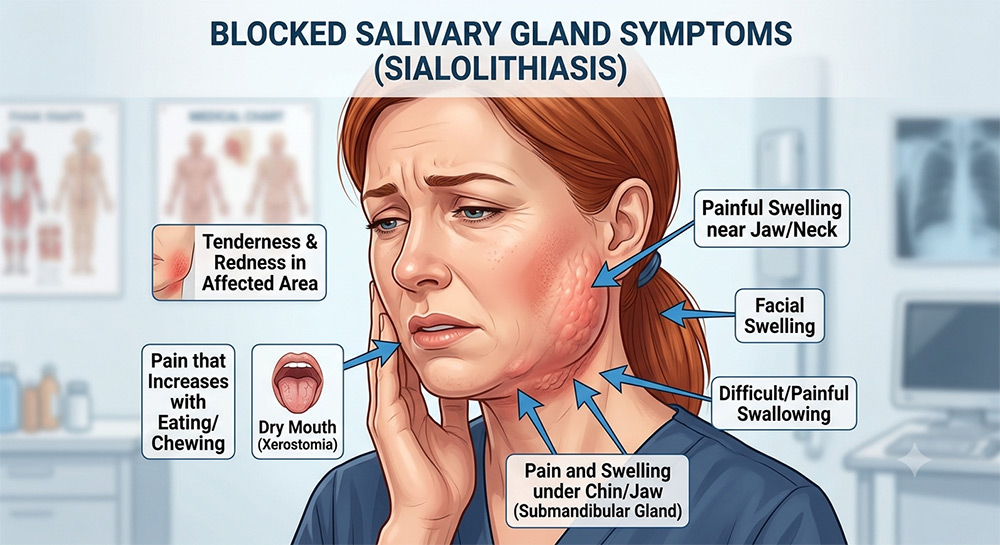
Swelling that repeatedly appears around meals can be an early indication that saliva is not draining normally.
7 Early Signs of a Blocked Salivary Gland
Early symptoms can vary depending on which gland is affected and how much of the duct is obstructed. The following signs do not always confirm a blockage, but recurring symptoms in the same location are worth paying attention to.
| Sign | What it typically feels like | When it matters most |
|---|---|---|
| Swelling under the jaw, cheek or tongue | Puffiness or fullness on one side | Appears or worsens during meals |
| Pain or pressure around meals | An ache or tightness rather than sharp pain | Triggered by sour foods |
| Swelling that settles and returns | Comes and goes in the same spot | Repeats over days or weeks |
| Tenderness over one gland | Sore when touched or pressed | Alongside mealtime swelling |
| Small firm lump in the mouth | Under the tongue or inside the cheek | Persists or grows |
| Reduced saliva or dry mouth | Sticky mouth, dry foods hard to swallow | With localised swelling |
| Altered or unpleasant taste | A foul or metallic taste | With pain, redness or discharge |
1. Swelling Under the Jaw, in the Cheek or Beneath the Tongue
A sudden localised swelling in these areas typically indicates a backed-up salivary duct.
Swelling may develop beneath the jaw when a submandibular gland is affected, around the cheek or in front of the ear when the parotid gland is involved, or beneath the tongue when a smaller gland or duct becomes blocked. It may begin as subtle puffiness, fullness or one side feeling different rather than an obvious visible lump.
2. Jaw or Cheek Pain That Worsens Around Meals
Discomfort triggered specifically by eating is a hallmark sign of a blocked salivary gland.
Eating, smelling food and even anticipating a meal can stimulate saliva production, increasing pressure behind a narrowed or blocked section of the duct. Early discomfort may feel like an ache, tightness or building pressure rather than sharp pain, and sour foods can make it particularly noticeable because they strongly stimulate saliva flow.
3. Salivary Gland Swelling That Settles and Keeps Returning
Intermittent swelling that disappears and recurs suggests a stone or blockage acting like a partial valve.
Swelling may develop during a meal, gradually reduce afterwards and return the next time saliva production increases. This repeated cycle is easy to dismiss once the gland appears to recover, but recurring swelling in the same area can indicate that the underlying drainage problem remains.
4. Tenderness Around One Salivary Gland
Localised soreness when pressing on the jaw, cheek, or floor of the mouth often points to an inflamed gland.
An affected gland may feel sensitive when touched, pressed or moved, with tenderness developing beneath the jaw, along the floor of the mouth or around the cheek. It may initially resemble a swollen lymph node, tooth problem or muscle discomfort, but a connection with mealtime swelling or altered saliva flow makes a gland blockage more relevant.
5. A Small, Firm Lump Under the Tongue or Inside the Cheek
A persistent hard spot under the tongue or inside the cheek can be a detectable salivary stone or duct mass.
A stone or obstruction near the opening of a salivary duct may sometimes feel like a small, firm lump beneath the tongue or inside the cheek. Not every blockage creates a noticeable lump, as the obstruction may sit deeper within the duct, and any new lump that persists or grows should not automatically be assumed to be a salivary stone.
6. Reduced Saliva or an Unusually Dry Mouth
Inadequate saliva flow can stem from a duct obstruction or underlying salivary gland dysfunction.
When a duct is obstructed, less saliva may reach the mouth from the affected gland, creating a dry or sticky sensation or making dry foods more difficult to swallow. Dry mouth (xerostomia) has many possible causes, but it becomes more relevant when it develops alongside localised swelling, tenderness or pressure.
7. A Change or Unpleasant Taste in the Mouth
A foul or metallic taste in the mouth often indicates stagnant saliva or a secondary gland infection.
When saliva remains trapped behind a blockage or drains irregularly, some people notice an altered or unpleasant taste. A temporary change can occur without infection, but a persistent foul taste accompanied by increasing pain, redness or discharge may indicate that stagnant saliva has contributed to inflammation or infection.
What Causes a Blocked or Swollen Salivary Gland?
A blocked or swollen salivary gland is generally linked to one of three causes: obstruction, infection, or an autoimmune condition. Obstruction can occur from a salivary stone, a narrowed duct, scar tissue, or thickened saliva. Infection may be bacterial (commonly Staphylococcus aureus) or viral (such as mumps, influenza, or Epstein-Barr virus). Autoimmune conditions, such as Sjogren’s syndrome, can also affect the glands that produce moisture, leading to ongoing dryness and swelling.
Who Is Most at Risk of a Blocked Salivary Gland?
Risk may be higher in adults over 50, people with existing dry mouth, and those who are dehydrated or undernourished. Recent illness or surgery, as well as certain medications that can reduce saliva flow, may also play a role.
Signs a Blocked Salivary Gland Is Becoming Infected
A persistent obstruction can lead to increasing inflammation or infection, causing discomfort that no longer settles between meals. Fever, increasing redness, pus draining into the mouth, severe pain, swelling that remains enlarged, or growing difficulty opening the mouth or swallowing should not be treated as minor early changes.
When Should You See a Doctor About Blocked Salivary Gland Symptoms?
A single episode of mild swelling or mouth discomfort does not necessarily mean a salivary gland is blocked. However, symptoms that repeatedly affect the same area, particularly around meals, can suggest that saliva is not draining normally and are worth assessing even when each episode eventually settles.
Book an Appointment With Head2Neck
If you have recurring swelling, mealtime pain, tenderness or other blocked salivary gland symptoms, you can contact Head2Neck to arrange an appointment. We can assess the affected gland, investigate what may be interfering with saliva flow and explain the most appropriate next steps.
Blocked Salivary Gland Symptoms: Frequently Asked Questions
Is a blocked salivary gland always caused by a stone?
No. Salivary gland stones (sialolithiasis) are a frequent cause, but ducts can also become blocked because of narrowing, scar tissue, inflammation or thickened saliva. Identifying the cause is important because different obstructions may require different approaches.
Which salivary glands are most likely to become blocked?
The submandibular glands are the most likely to become blocked, since their ducts run uphill and their saliva is thicker, making stones (sialoliths) more likely to form and obstruct the flow.
Can dehydration lead to a blocked salivary gland?
Dehydration can reduce saliva production and make saliva more concentrated or difficult to drain. This may increase the likelihood of temporary obstruction or contribute to salivary gland stone formation in susceptible individuals.
Can medication affect salivary gland drainage?
Some medications reduce saliva production or contribute to dry mouth, which can make saliva thicker. The possible role of medication should be discussed with a clinician rather than stopping prescribed treatment without advice.
Can a blocked salivary gland affect only one side?
Yes. An obstruction often affects one particular gland or duct, so pain and swelling may be limited to one side of the jaw, cheek or mouth. Bilateral swelling can occur but may also suggest another salivary gland condition.
How long can blocked salivary gland symptoms last?
Blocked salivary gland symptoms typically last minutes to hours after eating before gradually subsiding, though if the obstruction remains, the same pattern can return over days or weeks, sometimes becoming more frequent or persistent.
Can a blocked salivary gland cause ear discomfort?
A blockage affecting the parotid gland can cause pressure or discomfort around the cheek, jaw and area in front of the ear. Because several dental, muscular and ear conditions can cause similar symptoms, recurring discomfort should be properly assessed.
Can blocked salivary glands cause bad breath?
Reduced saliva flow can allow bacteria and food debris to remain in the mouth, potentially contributing to unpleasant breath or taste. Bad breath alone is not specific to a salivary gland blockage and has many other possible causes.
Is a blocked salivary gland contagious?
No. A physical obstruction, such as a stone or a narrowed duct, is not contagious. Some infections can affect the salivary glands, but these are separate from the blockage itself and vary in cause. Viral infections that affect the salivary glands, such as mumps, can be passed on through infected saliva spread by coughing or sneezing, but the blockage itself is not transmissible.
Can children develop blocked salivary glands?
Salivary gland obstruction can affect children, although some causes are more frequently encountered in adults. Recurrent facial or jaw swelling in a child should be assessed rather than assumed to be caused by a stone.
Can a blocked salivary gland clear on its own?
Yes, a blocked salivary gland can sometimes clear on its own, especially if the blockage is small (like early mucus buildup or a tiny stone) and you help things along.
How is a blocked salivary gland diagnosed?
A blocked salivary gland is typically diagnosed through a physical exam combined with imaging tests such as ultrasound, CT scan, or sialography (an X-ray using contrast dye injected into the gland’s duct) to locate the blockage.
What happens if a blocked salivary gland is left untreated?
If left untreated, a blocked salivary gland can lead to a painful bacterial infection (sialadenitis), recurrent swelling and pain, especially when eating, and in some cases abscess formation that may require surgical drainage.
Can a blocked salivary gland cause a fever?
Yes, a blocked salivary gland can cause a fever, usually when the blockage leads to a bacterial infection (sialadenitis) rather than from the blockage alone.
What is sialendoscopy and when is it used?
Sialendoscopy is a minimally invasive procedure that uses a thin, flexible endoscope to look directly inside the salivary gland ducts, allowing doctors to diagnose and treat blockages without traditional open surgery.
Is a blocked salivary gland the same as sialadenitis?
No, a blocked salivary gland (sialolithiasis, usually caused by a stone) and sialadenitis (inflammation/infection of a salivary gland) are related but distinct conditions, though one often leads to the other.